Urgent dental care · Open today
Trauma Assessment
A knock to the mouth can damage teeth, roots and bone in ways you cannot see. We examine the injury, take radiographs, treat what needs treating on the day and record everything, so damage that shows up later is not missed.
Same-day appointments · No registration required · Evenings & weekends
What this treatment is
The first hour matters, and so do the next few months
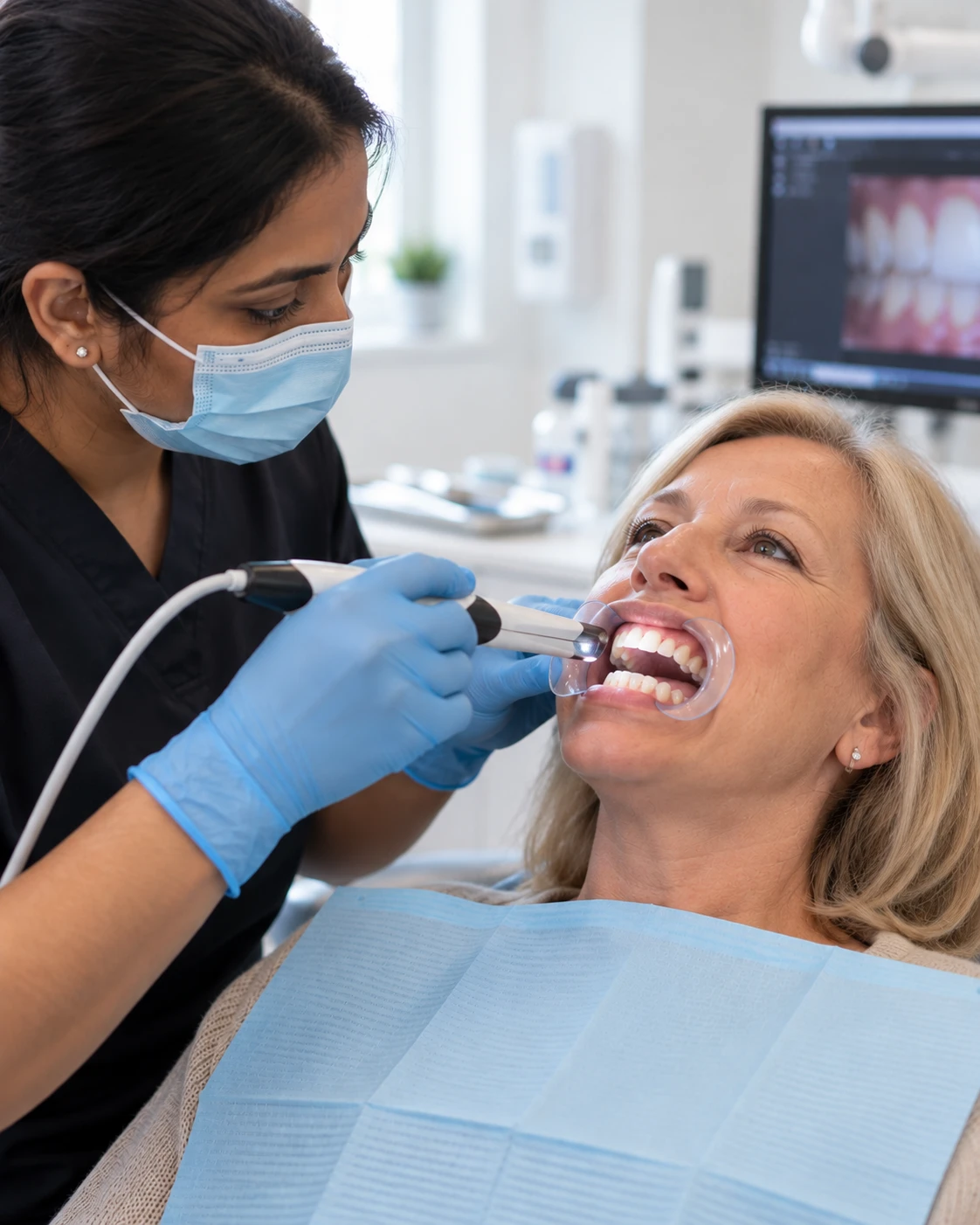
Falls, sport, cycling accidents and blows to the face can chip, loosen, push in or knock out a tooth. Some injuries are obvious; others, like a fractured root or a damaged nerve, only show on a radiograph or weeks later. At your appointment we examine the teeth, gums, lips and jaw, take radiographs, and treat the injury the same day: smoothing or bonding a broken edge, repositioning and splinting a loosened tooth, or replanting one that has been knocked out. We photograph and record the findings, which also helps with insurance or a claim, and arrange reviews to check the nerve is healing.
- Hidden damage found early — radiographs show root fractures and bone injuries that cannot be seen in the mouth.
- Treated on the day — broken edges, loosened teeth and knocked-out teeth are dealt with at the first appointment wherever possible.
- Everything recorded — photographs and clinical notes document the injury for follow-up, insurance or a claim.
Signs you need it
Come in today after any of these
If you have hit your head, lost consciousness, feel sick or confused, or have heavy bleeding or difficulty breathing, go to A&E first. Dental injuries can be treated once you are safe.
A knocked-out tooth
01
An adult tooth knocked out completely. Come in immediately, ideally within the hour.
A chipped or broken tooth
02
A piece of tooth broken off, with or without sensitivity or a pink spot showing.
A loose or displaced tooth
03
A tooth that moves, has been pushed in or out, or now sits differently in the bite.
Cut lips, gums or tongue
04
A cut inside the mouth or on the lip that is deep, gaping or will not stop bleeding.
Pain on biting after a knock
05
Teeth that look intact but hurt to bite on, which can mean a fractured root.
A tooth darkening after injury
06
A grey or dark tooth weeks after an accident, a sign the nerve has been damaged.
What to expect
How the injury is assessed and treated
Examination and radiographs
Step 01
We check the teeth, gums, lips and jaw, test how the teeth respond and take radiographs to look for root and bone damage.
Recording the injury
Step 02
Photographs and notes record the injury in detail, for your follow-up and for insurance or a claim if you need one.
Treating the injury
Step 03
We bond a broken edge, reposition and splint a loose tooth, or replant a knocked-out one. Anything beyond us is referred the same day.
Review appointments
Step 04
We check the injured teeth over the following weeks and months, as nerve damage can appear long after the accident.
Price & appointment length
trauma assessment, from
The fee covers the examination, radiographs, clinical photographs and a written record of the injury. Treatment such as bonding, splinting or replanting a tooth is quoted and confirmed with you before we start.
| Appointment length | 30–45 minutes |
| Radiographs | Included |
| Photographs and report | Included |
| Treatment | Quoted before we start |
| Registration | Not required |
Questions
Before you come in
Had an accident and not sure how serious it is? Call the practice and describe what happened, and we will tell you what to do next.
What should I do if a tooth is knocked out?
Pick it up by the crown, not the root. If it is dirty, rinse it briefly in milk or cold water, then push it back into the socket and bite on a clean cloth. If you cannot, keep it in milk or inside your cheek and come straight in. The sooner it is replanted, the better the chance it survives.
Should I bring the broken piece of tooth?
Yes. Keep it in milk or water and bring it with you. A clean fragment can sometimes be bonded back onto the tooth.
My tooth looks fine. Do I still need to be seen?
Yes. A tooth can look normal while the root is fractured or the nerve is bruised. A radiograph shows damage that is not visible, and treating it early gives the best outcome.
Why do I need follow-up visits?
Injured teeth can lose their nerve weeks or months later, often without pain. Reviews let us check the nerve is healing and treat any change before an infection develops.
Can you treat children's teeth after an accident?
Yes. Baby teeth and adult teeth are treated differently, and a knocked-out baby tooth is not replanted. Bring your child in and we will assess both the injured tooth and the adult tooth developing underneath.
In pain today?
Call the clinic or book online. New patients are welcome, and no registration is required.